



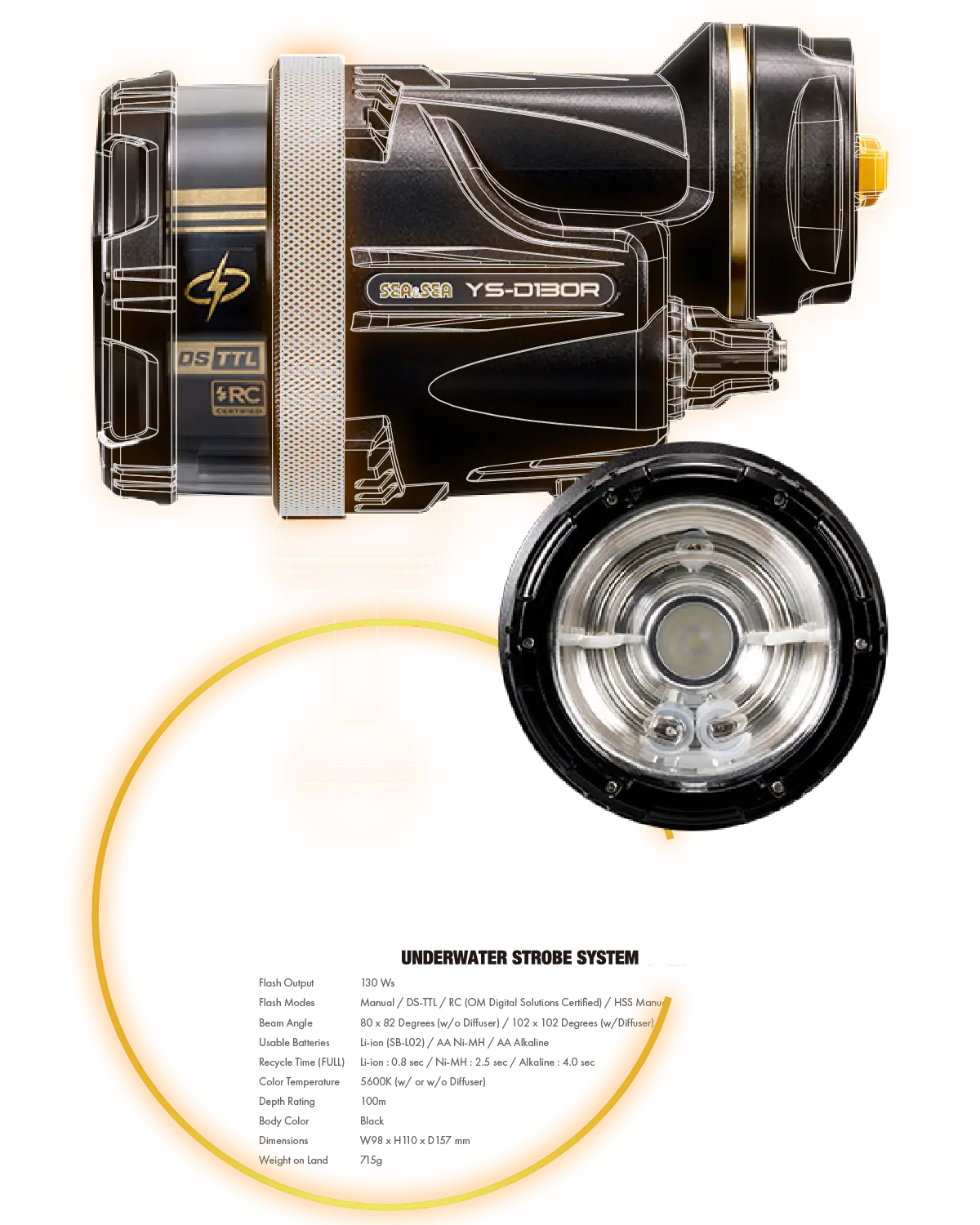
The continuous shooting feature—made possible by improved charging speed—is extremely effective for capturing fleeting moments in the behavior of underwater creatures. When using the dedicated lithium-ion battery, the YS-D130R is capable of continuous shooting at a rate of 5 to 10 frames per second.
Burst-Shooting Capabilities That Keep Up with “Machine-Gun-Style” Shooting
ーー I hear you conducted your own testing on the YS-D130R's “continuous flash” feature.
Hideki Abe (hereinafter referred to as Abe) With the improvement in continuous shooting performance in recent cameras, users tend to make frequent use of “machine-gun-style” shooting. Focusing on this trend, we conducted a test on continuous flash firing. First, we tested in the studio to see how long we could shoot continuously without any change in light output.
Test Setup / On-Site Test Equipment and Conditions
- Flash
- SEA&SEA YS-D130R × 2
- Equipment Used
- Nikon D500 (M / HSS / TTL)
- Metering Mode (TTL)
- Center-weighted metering
- ISO Sensitivity
- 200–800
- Lenses Used
- 60mm Macro (AF-S f/2.8G ED), 10–24mm, 8–15mm
- Converter
- UWT / Channel 2 (Nikon D500)
- YS-D130R Settings
- Shot in M mode, TTL mode, and HSS mode
- Continuous Flash Interval
- 1–10 frames per second
- M Mode Light Level
- Full to -4.0
- Image Quality
- RAW (Uncompressed, Maximum)
- Test Subjects
- X-Rite Color Chart, White & Black Boards, Others
ーー What were the specific threshold values that emerged from the tests?
Abe I confirmed that at an exposure value of -4.0 and a rate of 5 frames per second (with 0.2-second intervals), the camera can capture up to 39 frames (just over 7 seconds) without any timing errors. Since the number of consecutive frames varies depending on the camera model, I suspect this is due to a write overflow on the camera’s side.
ーー So, after that, they conducted demonstration tests underwater, right?
Abe I determined the aperture value after considering the distance between the subject and the YS-D130R, as well as the desired depth of field. I then set the maximum flash output based on how long the flash could fire continuously during on-land testing at that light level. I also set the ISO sensitivity to a level that would allow me to effectively reduce high-ISO noise during post-processing without straining the system.
Underwater Test / Underwater Test Conditions
- ISO Sensitivity
- 800 (determined based on distance from the subject and flash power)
- Aperture
- f/5.6, f/6.7 (as above)
- Shutter Speed
- 1/250 (to prevent blur from fast-moving subjects)
- Frames per second
- 4–10 frames per second (to monitor stress on the subject)
- YS-D130R Light Level
- -0.3 to -5.0
- Subject
- Moray eels (Tiger moray)
ーー Why did you choose a moray eel as your subject?
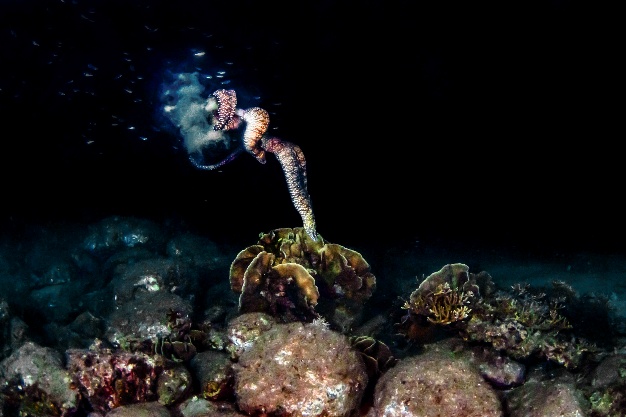
Abe There are four reasons. First, there is significant movement in a very short time—about two seconds—from the spawning ascent through spawning in the midwater column to settling on the bottom, making it a subject where you can expect great results. Second, the process from courtship to the spawning ascent takes place at a fixed location, making it easy to time the ascent and ensuring it’s a subject anyone can observe. Finally, it’s a subject that makes you think, “With this equipment, maybe even I could capture it,” rather than requiring the kind of technical mastery typically reserved for professional photographers.
Sample Photos | Breeding Behavior of the Tiger Moray Eel Captured Using Continuous Flash
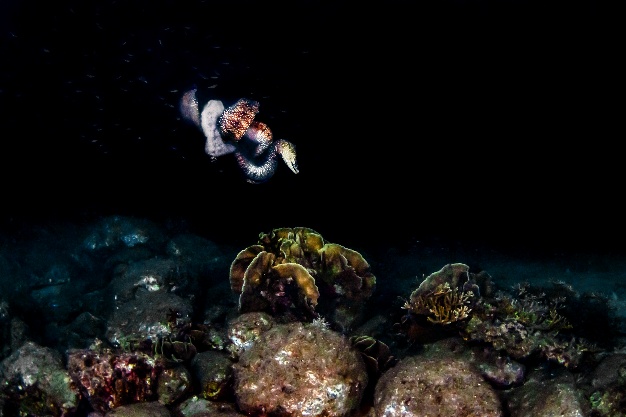
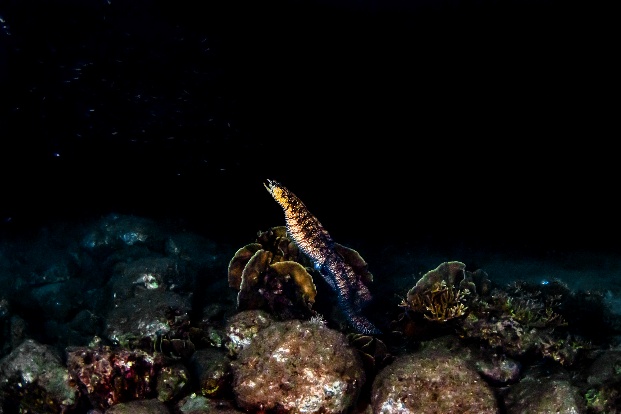
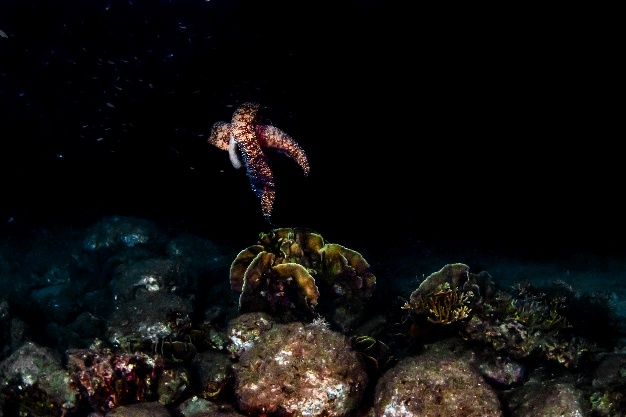
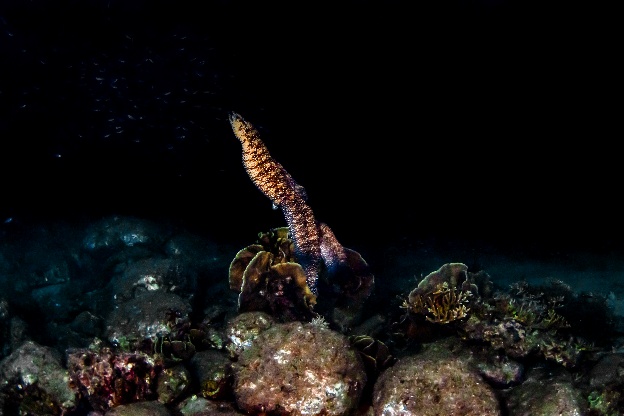
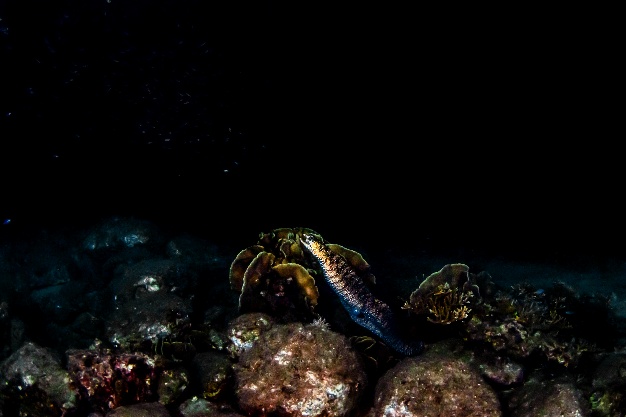
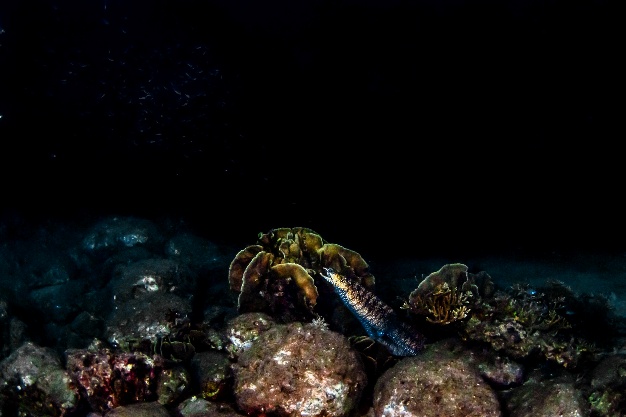
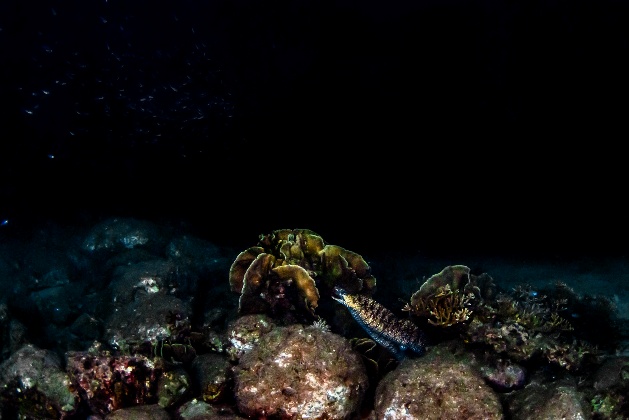
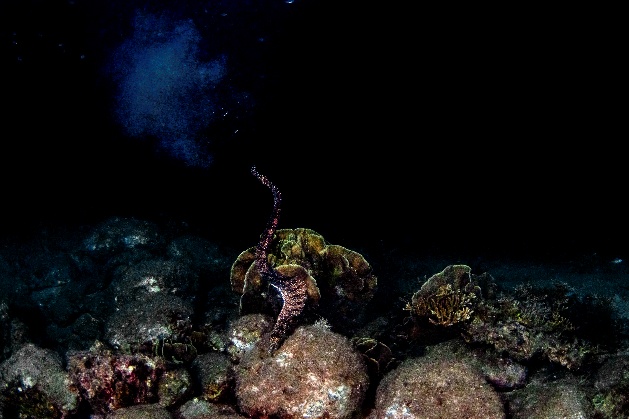
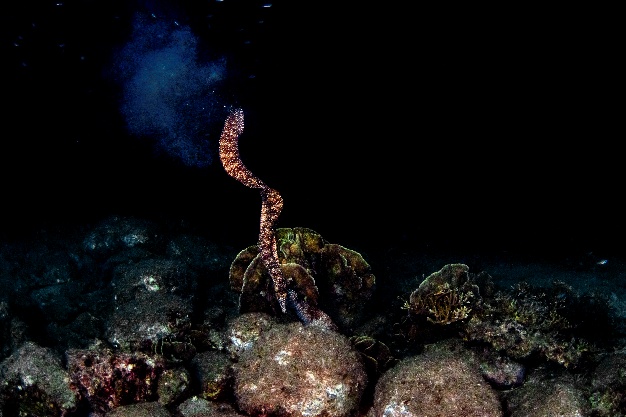
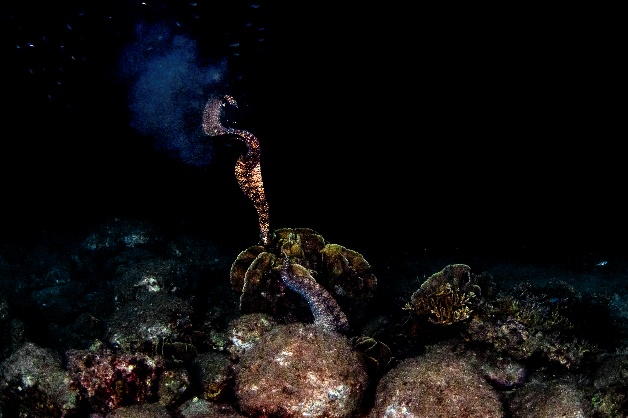
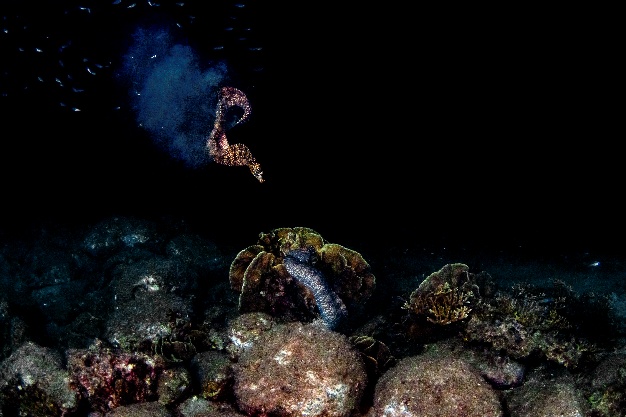
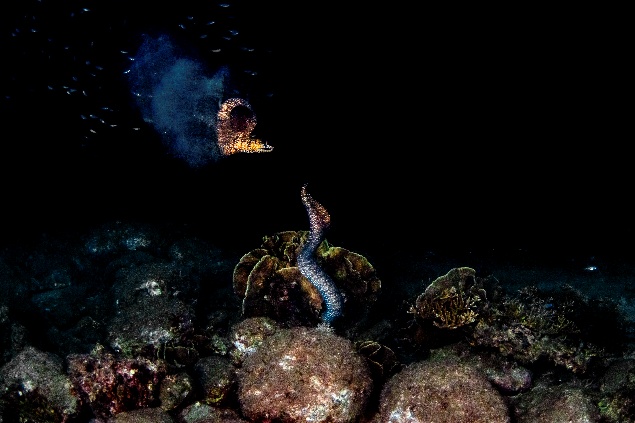
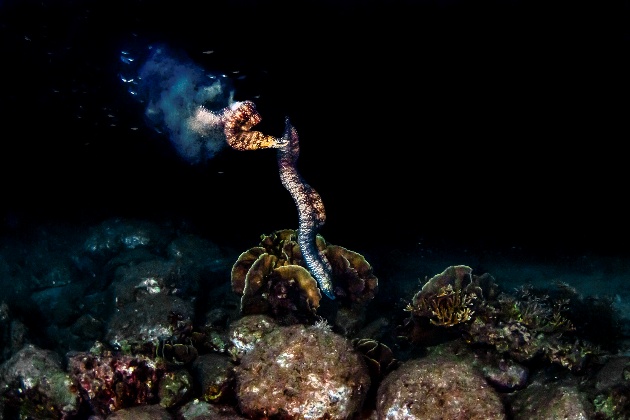
▲ Continuous shooting at 5 frames per second (0.2-second intervals) / Mounted on an underwater tripod / 2 YS-D130R strobes—14 frames total (approx. 3 seconds)
ーー That's a really dynamic sequence of photos. How did you take them?
Abe I thought that showing a continuous sequence of images taken every 0.2 seconds would create a strong visual impact, so I set up a tripod underwater and mounted the housing on it to take the photos. The images shown here are 14 frames (about 3 seconds), but I actually shot for 4 seconds.
ーー In the on-land verification tests, why was the frame rate set to 5 frames per second, even though tests were conducted at up to 10 frames per second?
Abe A maximum of 10 frames per second. We determined that setting the continuous flash rate to 6 frames per second or higher would cause significant adverse effects, such as halting egg-laying altogether.
ーー So, shooting at the limits of your equipment isn't always the best approach?
Refrain from excessive continuous shooting. I believe that is the right direction for nature photography.
By the way, — what has your experience been like actually using the “YS-D130R” on site?
Abe Not only are my ideas constantly expanding as I explore the possibilities of new shooting techniques made possible by advanced features like TTL and HSS, but I also find myself wanting to spend the whole day underwater taking photos.
With its lightning-fast charging speed and the limitless possibilities of High-Speed Sync (HSS), this flash will surely become a reliable tool for photographers and serious amateurs alike. Moreover, the accuracy of its TTL system is truly remarkable—it’s a lighting system trusted not only by amateurs but also by professional photographers. In any case, as a piece of equipment that expands the range of creative expression, expectations for it just keep rising.
Feedback from over 100 users: Real pros and cons
ーー I hear you gathered feedback from many users for this article.
Abe Yes. It’s been over eight months since I started using the YS-D130R, and I didn’t just rely on my own opinion—I also conducted a survey of more than 100 amateur and advanced amateur photography enthusiasts I met during my field research. I asked them about the features they liked and the areas they’d like to see improved, so let me share the results with you.
◎ Top 5 Strengths
- Excellent basic performance, such as charging speed
- It shows the remaining battery level and is very easy to use
- Settings like HSS and RC are color-coded, making them intuitive and easy to use
- You can set the beep sound for switch operations and when charging is complete, which enhances the user experience
- No water gets into the battery compartment, so you can use it with confidence even in non-well-lit areas
△ Top 5 Weaknesses
- The optical cable comes loose easily from the main unit's socket
- The base of the optical cable does not rotate, which can cause it to kink
- The main unit's target light feature is difficult to use or is not used
- Dirt, such as sand, in the battery compartment's O-ring is hard to spot
- The alignment marks on the battery cover and the main unit are hard to see or have worn off
ーー So, the top advantage is how fast it charges, right?
Abe As expected, the excellent basic performance—such as fast recharge times—was cited as the top reason.
Fast recharge is a prerequisite for continuous shooting. With standard strobes that take a long time to recharge, the flashes can’t keep up, resulting in choppy footage.
Other highlights include being able to see the remaining battery level at a glance, color-coded settings for features like HSS and RC, and a beep that sounds during operation. Overall, many users commented that it’s simply very easy to use.
The battery compartment cover has also been improved from previous SEA&SEA products; it’s designed to prevent water droplets from entering the compartment, which earned high praise for its reliability.
ーー On the other hand, there are also those who hope for improvements.
Abe The main issue concerns fiber-optic cables. This is largely because many users are accustomed to the screw-in type cables used by other companies.
There were also minor requests, such as making it easier to spot debris around the O-ring in the battery compartment and preventing the position markers on the battery cover from fading so easily.
ーー The opinions on the Target Light are also interesting.
Abe Only a very small minority of users were using the flash unit’s built-in target light. It seems this stems from a desire to conserve the flash’s battery life as much as possible. Additionally, since many users carry a separate light for focusing, they did not seem to feel a strong need for it.
ーー So you're not using it, right?
Abe Although this feature isn’t currently in use, there were a great many comments stating, “If there were an ultra-narrow-angle light to indicate the flash’s direction, it would be easier to confirm the flash’s orientation.” This reflects the fact that many people are missing their shots because they fail to aim the flash properly.
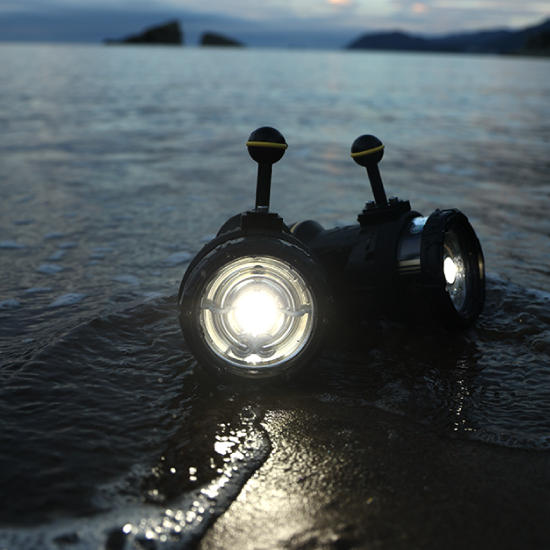
It was largely unknown that the YS-D130R, which features a circular light tube, is equipped with a target light at its center to help reduce missed shots.
ーー Based on the survey results, were there any features that people weren't aware of but would like to see used?
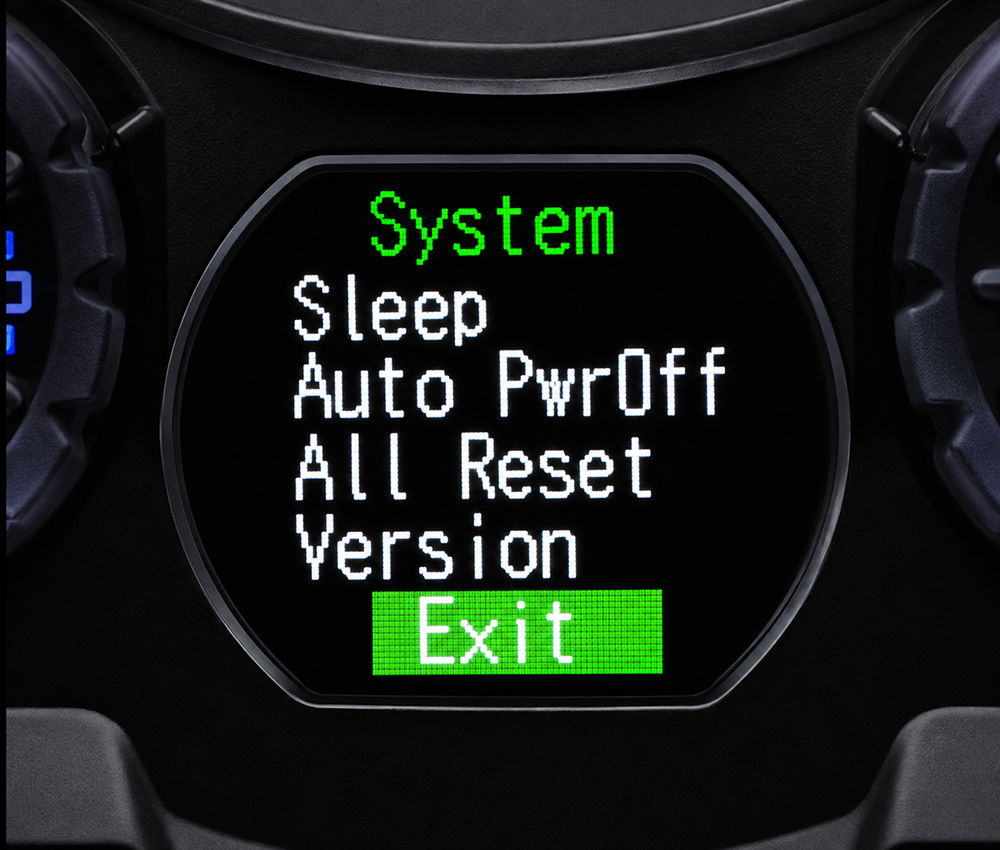
Abe These are the sleep and auto-power-off settings. Many people didn’t realize how convenient these features are. Since even store staff and local guides are largely unaware of them—and thus rarely have the opportunity to explain them to users—this feature prevents users from forgetting to turn off the device and leaving it on while resting on the water’s surface, thereby eliminating unnecessary battery drain. I consider this a major advantage.
| Setting Item | Setting Value | Description | Default Value |
|---|---|---|---|
| Sleep (Sleep) | OFF / 5 min. / 10 min. / 30 min. / 60 min. | Sleep Mode Duration Selection | OFF |
| Auto Power Off (AtPwrOff) | OFF / 5 min. / 10 min. / 30 min. / 60 min. | Auto Power Off Time Selection | OFF |
ーー We hope you’ll use Mr. Abe’s test data as a reference and try creating your own work that takes full advantage of the YS-D130R’s continuous shooting capabilities.